Coinage of
Banda Singh Bahadur

The First Sovereign Sikh Coins, AD 1710–1716

VS 1767 – VS 1773  ·  Lohgarh Mint

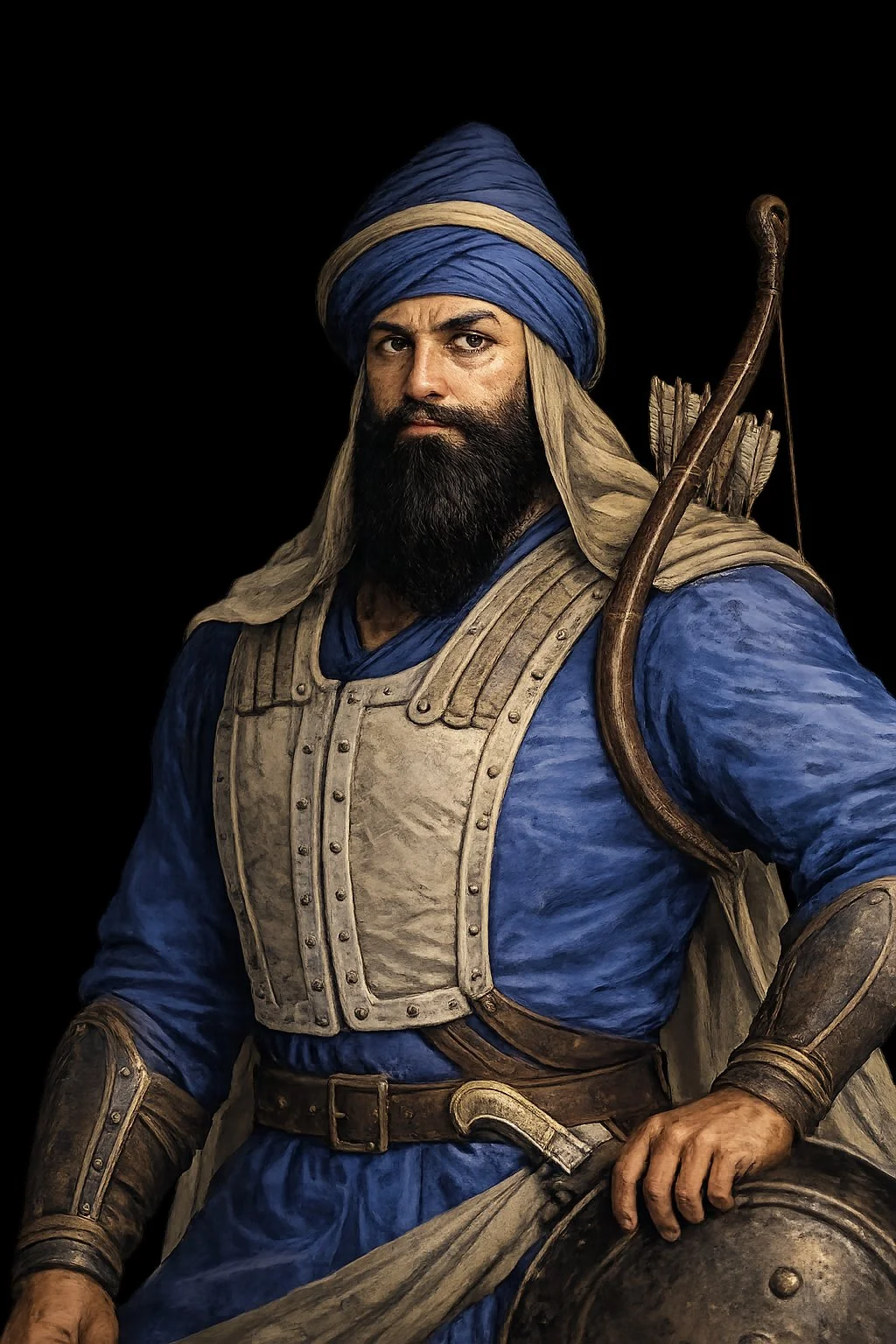
Banda Singh Bahadur

Banda Singh Bahadur (1670–1716)
Artist's reconstruction after historical sources

Biography

From Lachhman Dev to Banda Singh Bahadur

Born Lachhman Dev on Katak Sudi 13, VS 1723 (1670 AD) in the village of Rajauri, District Poonch, to a Rajput father named Ramdev Bhardwaj, he was destined for a life far beyond his origins. As a young man, he killed a pregnant doe during a hunt; watching her two newborns die before him shook him to his core and set him irrevocably upon a spiritual path. He renounced his home, took diksha from a Bairagi sadhu named Janki Prasad — who renamed him Madho Das — and later studied yoga and tantra under the yogi Aughar Nath at Panchwati near Nasik.

After Aughar Nath's death, Madho Das established his own dera at Nanded on the banks of the Godavari. His reputation for tantric powers spread, and it was said that he was not above using them to intimidate visiting ascetics. It was through Jait Ram, the Mahant of the Dadu Dwara at Jaipur, that Guru Gobind Singh heard of him — and resolved to visit him, less to confront than to redirect a powerful soul toward righteousness.

Their meeting at Nanded in 1708 is one of the most celebrated encounters in Sikh history. The Guru transformed Madho Das entirely: he received amrit, took the name Gurbaksh Singh, and was given the title Banda Bahadur — the Brave Slave of the Guru. Armed with five arrows, a nagara drum, a nishan sahib, five Singhs as companions and a string of hukamnamas to the Sikh sangats of Punjab, he was despatched northward with a divine commission: to punish the oppressors of the Khalsa.

On 7th October 1708, Guru Gobind Singh departed this world. Banda Bahadur, already on his way north, would carry the Guru's authority into Punjab — and forge, in the brief years of his sovereignty, the first coins ever struck in the name of the Khalsa.
From Nanded to Lohgarh

A Military Chronicle, 1708–1716

3rd March 1708

Death of Aurangzeb

The Emperor Aurangzeb dies, plunging the Mughal empire into succession crisis. Banda Bahadur begins his march north from Nanded in October, carrying Guru Gobind Singh's hukamnamas to the Sikh sangats.

Turning Point

1709 — Haryana

First Victories — Samana, Kaithal, Sonipat

Reaching Kharkhauda on the outskirts of Delhi, Banda's forces loot the government treasuries at Bhiwani, Sonipat and Kaithal in rapid succession. In November, Samana falls — a decisive early victory. Fateh Singh is placed in charge.

Victory

February 1710

Lohgarh — Capital of the Khalsa Kingdom

Headquarters are established at Lohgarh in the Shivalik foothills. A government is formed to collect taxes and administer the conquered territories — the first machinery of Sikh governance. It is here that the sovereign coins are struck.

Capital Founded

May 1710

Battle of Chappar Chiri — Fall of Sirhind

The climactic battle of Banda's campaign. Nawab Wazir Khan of Sirhind — the man responsible for the execution of Guru Gobind Singh's younger sons — is defeated and killed at Chappar Chiri. Sirhind falls. The Mughal akhbar records the defeat. Baz Singh is appointed Governor of Sarhind; Ram Singh takes Thanesar and Binod Singh, Karnal.

Decisive Victory

June 1710

Advance Towards Lahore

Ransom received from Malerkotla. Victories at Morinda, Hoshiarpur and Jalandhar. Batala sacked, Kalanaur captured. Banda makes pilgrimages to Kiratpur, Anandpur and Sri Harmandir Sahib at Amritsar, where large offerings are made. The Sikhs of Majha join his forces. The march towards Lahore is checked by Governor Sayyid Islam Khan, who holds the city.

Campaign

July 1710

Upper Gangetic Doab Campaign

Crossing the Yamuna at Rajghat near Buria, victories are won at Saharanpur, Behat, Nanawah and Jalalabad, extending Sikh authority deep into the eastern territories.

Victory

October 1710

Battle of Rahon — Retreat to Lohgarh

Muslims declare a Haidari jihad against the Sikhs. Rahon is lost, then Sarhind. Banda retreats to Lohgarh as Mughal Emperor Shah Alam I advances from Rajasthan with a massive imperial force. On 10th December, Lohgarh is besieged. The following day Banda escapes. Mughal forces recover gold and silver coins worth 8 lacs, and a further 20 lacs dug from the fortress.

Defeat & Retreat

1711–1712

Return from the Hills — Victories at Batala & Sarhind

From Kiratpur, Banda sends hukamnamas to Sikhs across the region and marries a princess in Chamba. Returning in September 1711, he seizes Pathankot, Gurdaspur and Batala. After the death of Emperor Shah Alam I at Lahore in February 1712, chaos in the Mughal camp allows Banda to defeat Governor Islam Khan and retake Sarhind, killing Bayazid Khan.

Recovery

1713–1715

Siege of Gurdas Nangal — Final Encirclement

The new Emperor Farrukhsiyar appoints Abdus Samad Khan to Punjab with relentless orders to destroy the Sikhs. Banda is driven into the hills. Mata Sundari writes to him to end hostilities; he declines and is excommunicated. The Khalsa splits into Tat Khalsa and Bandai Khalsa. By April 1715, Gurdas Nangal is besieged. In December, starved into submission, Banda is captured — 600 rupees and 23 gold mohurs found on him.

Final Siege

9th June 1716

Execution at Delhi

Banda Singh Bahadur is executed at Delhi. He faced his end with a composure that awed his captors. The Mughal persecution of the Sikhs — ordered under Farrukhsiyar's edict — would intensify for another two decades. A Sikh head was worth 25 rupees; a captive Sikh, 100.

Martyrdom

Numismatics

The Coins of the Khalsa Kingdom

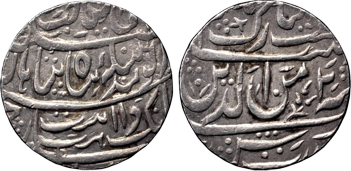
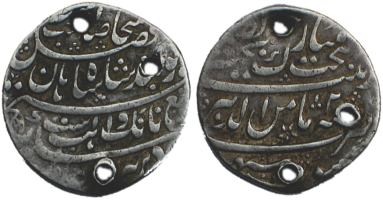
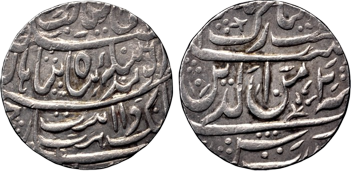
The coins struck by Banda Singh Bahadur at Lohgarh occupy a singular position in Sikh numismatic history: they are the first coins ever issued in the name of the Khalsa, the first expression of Sikh sovereign authority in metal. Only two types are known — of Year 2 and Year 3 of his brief reign — and of the Year 2 rupee, a single specimen is recorded.

Remarkably, the legends on both coins are entirely in Persian — the administrative and literary language of the Mughal world — with no Gurmukhi script. This was a deliberate assertion: sovereignty proclaimed in the very language of the empire being displaced. The obverse names the sword of Nanak as the source of all authority and Guru Gobind Singh as Shah-i-Shahan, King of Kings; the reverse declares the Khalsa as the issuing power and names Lohgarh — Mashwarat Shahr, the City of Counsel — as the seat of the throne. A subtle but significant variant exists between the two coins: the Year 2 rupee names the Guru as "Gobind Shah-i-Shahan," while the Year 3 rupee reads "Gobind Singh Shah-i-Shahan."

Year 2 Rupee

Banda Singh Bahadur Rupee Year 2

Mint

Lohgarh (ਲੋਹਗੜ੍ਹ)

Metal & Type

Silver Rupee

Regnal Year

Year 2 (VS 1768 / AD 1711)

Obverse Couplet (Persian)

Sikka zad bar Har-do-Alam Tegh-i-Nanak wahib ast Fath Guru Gobind Shah-i-Shahan fazl Saccha Sahib ast

"The coin is struck on both worlds by the sword of Nanak, the bestower; Victory is Guru Gobind, King of Kings — grace of the True Lord."

Reverse Couplet (Persian)

Zarb Khalsa Mubarak Bakht Ba-Aman ad-Dhar Zinat-al-Takht Maswarat Shahr, Sanah 2

"Struck by the Khalsa, at the Refuge of the World, the Walled City, Ornament of the Fortunate Throne, Year 2"

Note

The legends are entirely in Persian — no Gurmukhi script appears on this coin. The epithet used is Shah-i-Shahan, differing from the Year 3 coin which reads Singh Shah-i-Shahan.

Rarity

Unique — Only Known Specimen

Year 3 Rupee

Banda Singh Bahadur Rupee Year 3

Mint

Lohgarh (ਲੋਹਗੜ੍ਹ)

Metal & Type

Silver Rupee

Regnal Year

Year 3 (VS 1769 / AD 1712)

Obverse Couplet (Persian)

Sikka zad bar Har-do-Alam Tegh-i-Nanak wahib ast Fath Guru Gobind Singh Shah-i-Shahan fazl Saccha Sahib ast

"The coin is struck on both worlds by the sword of Nanak, the bestower; Victory is Guru Gobind Singh, King of Kings — grace of the True Lord."

Reverse Couplet (Persian)

Zarb Khalsa Mubarak Bakht Ba-Aman ad-Dhar Zinat-al-Takht Maswarat Shahr, Sanah 3

"Struck by the Khalsa, at the Refuge of the World, the Walled City, Ornament of the Fortunate Throne, Year 3"

Note

The legends are entirely in Persian. The Year 3 coin reads Singh Shah-i-Shahan on the obverse, whereas the Year 2 coin uses only Shah-i-Shahan — a subtle but noted variant.

Rarity

Extremely Rare

Royal Edicts

Hukamnamas of Banda Singh Bahadur

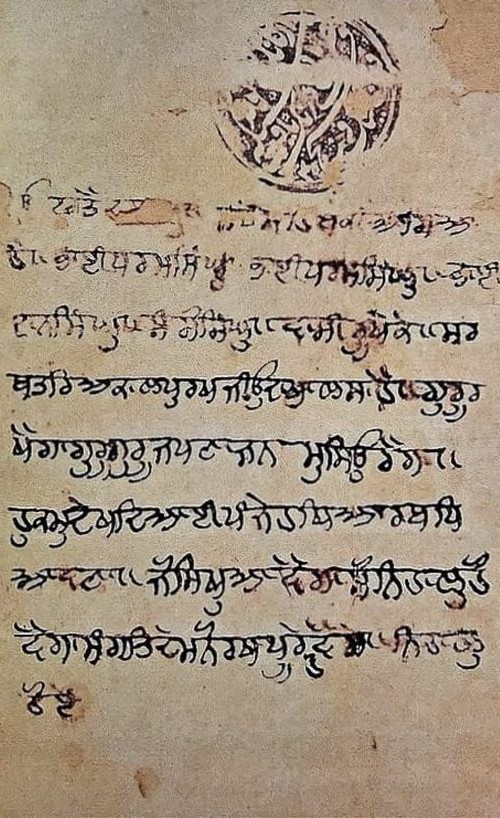
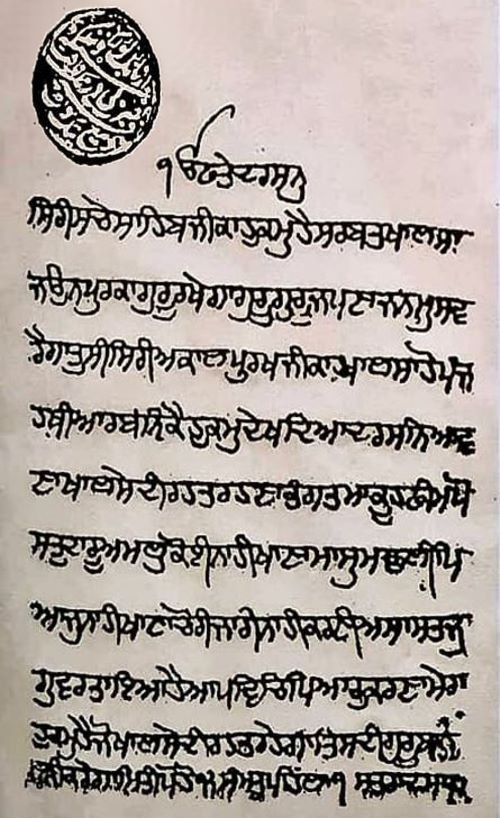
Alongside the coins, a small number of hukamnamas — royal edicts issued under Banda Singh Bahadur's seal — survive as the documentary evidence of his sovereign authority. Written in Gurmukhi, they were issued to Sikh sangats across the country, summoning support, dispensing justice and asserting the legitimacy of his governance in the name of the Guru. His seal, impressed at the head of each document, bears the Gobindshahi legend in Persian - "Deg Tegh Fath, Nusrat Bedarang; Yaft az Nanak Guru Gobind Singh" meaning "Food, Sword, Victory and infinite blessings recieved by the grace of the Guru's, from Nanak to Guru Gobind Singh"..

Hukamnama of Banda Singh Bahadur — Bhai Rupa Collection

Hukamnama of Banda Singh Bahadur
Held in the Bhai Rupa Collection
Note the official seal at the head of the document

Hukamnama of Banda Singh Bahadur with official seal

Hukamnama bearing the official seal of Banda Singh Bahadur, to the Sangat of Jaunpur, Year 1
The seal carries the Gobindshahi legend in Persian script

Scholarship

References & Bibliography