Sikh Numismatic ScholarshipThe Literature of the Coins of the Punjab
From Alexander Cunningham's field notes of 1848 to the Sidhu–Spink catalogue of 2022 — the succession of scholars who documented, classified, and interpreted the coins of the Khalsa.
The First Cataloguers
The numismatic study of Sikh coins began in the ruins of the empire itself. Alexander Cunningham was at Lahore as Archaeological Surveyor when the annexation took place; his coins chapter in the History of the Sikhs (1849) is the first scientific treatment. The works of the following half-century — Temple, Rodgers, Prinsep — laid the foundations on which all later scholarship was built.
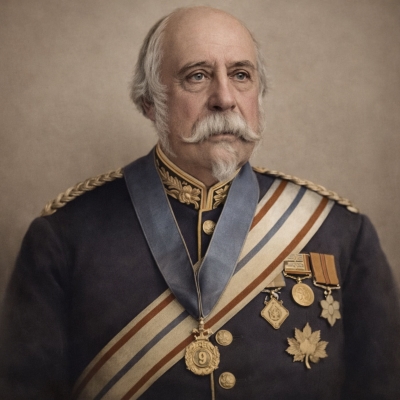
Alexander Cunningham
1814 – 1893 · Major-General, Royal Engineers; First Director-General, Archaeological Survey of IndiaChapter on Sikh Coins in Cunningham, J.D. — A History of the Sikhs (1849, revised 1918)
Alexander Cunningham was the first scholar to subject Sikh coinage to systematic study. Present in the Punjab during and after the annexation, he had access to the Lahore treasury and to coin collections assembled during the empire's final years. His numismatic chapter in Joseph Davy Cunningham's History of the Sikhs — in which he identified and classified the Gobindshahi and Nanakshahi couplets, the principal mints, and the major coin types — established the vocabulary and framework that all subsequent writers have used.
Cunningham's identification of the Nanakshahi couplet (Deg o Tegh o Fateh) and the Gobindshahi couplet (Akal Sahai) as the two primary legend traditions of Sikh coinage remains the foundational classification. He also established that the coins bore no ruler's name or portrait — a point he found historically remarkable and which has defined the scholarly discussion of Sikh numismatics ever since.
As Director-General of the Archaeological Survey of India from 1861, Cunningham also supervised the collection and cataloguing of the coins that ended up in the British Museum — many of which derived from General Court's collection, the rubbings from which were discovered at a Spink sale in 1994.
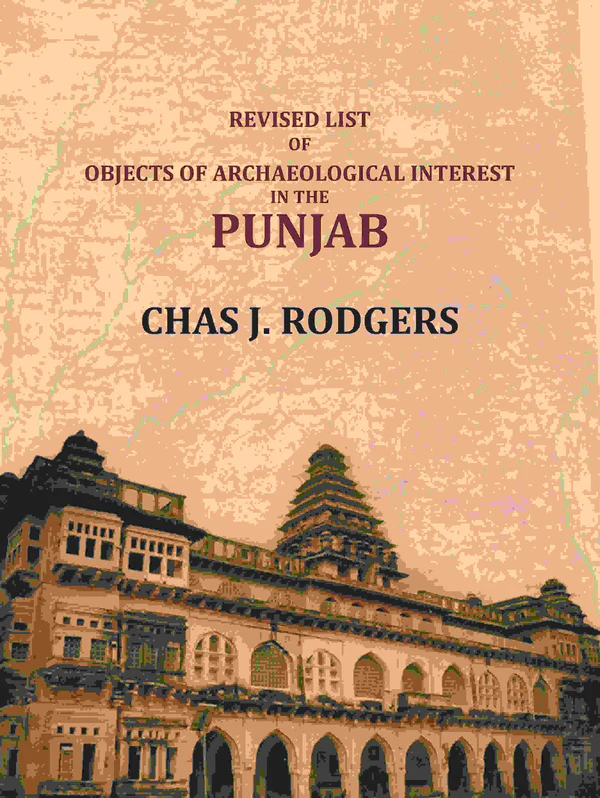
Charles James Rodgers
fl. 1880s–1890s · M.R.A.S. · Archaeological Surveyor, Punjab Circle · Honorary Numismatist to the Government of IndiaRevised List of Objects of Archaeological Interest in the Punjab (Lahore: W. Ball & Co., Govt. Printers, 1891)
Charles James Rodgers, who held the singular title of Honorary Numismatist to the Government of India, produced the most thorough catalogue of Sikh coinage available in the nineteenth century. His Revised List, printed at the Government Press in Lahore in 1891, drew on returns from Deputy Commissioners across the Punjab, old lists from the Public Works Department, and reports of the Archaeological Survey to compile a comprehensive inventory of objects of numismatic and archaeological interest across the entire province.
For Sikh coins specifically, Rodgers' catalogue provided the first systematic mint-by-mint classification, documenting the range of types, legend variants, and date sequences across the fourteen imperial mints. His work as Archaeological Surveyor for the Punjab Circle gave him access to field collections unavailable to scholars outside India. The 1891 Lahore edition held in the Central Archaeological Library (Accession No. 22678, Call No. 913.013/I.D.A/Rod) is among the rarest copies of this essential reference.
Rodgers also published on the broader Punjab numismatics in the Journal of the Asiatic Society of Bengal and the Numismatic Chronicle.
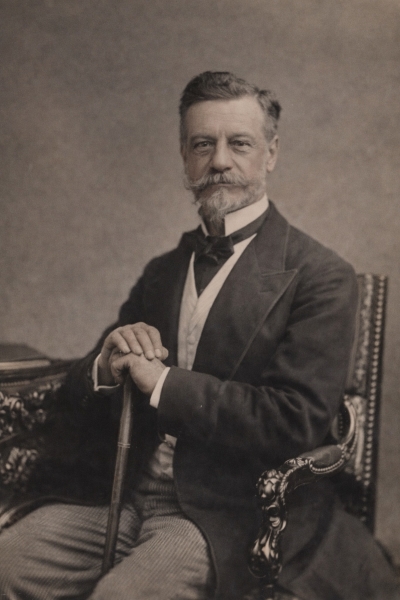
Richard Carnac Temple
1850 – 1931 · Lieutenant-General; Folklorist and Orientalist; editor, The Indian AntiquaryThe Coins of the Modern Native Chiefs of The Panjab Indian Antiquary, November, 1889
Richard Carnac Temple, son of Sir Richard Temple and a distinguished career officer in the Indian Political Service, produced the most detailed early study of the Cis-Sutlej Sikh coinage. His Coins of the Modern Native Chiefs of The Panjab — covered the Phulkian states of Patiala, Nabha, and Jind, as well as Kaithal and the other Cis-Sutlej minting authorities.
Temple's particular contribution was the analysis of the Durrani framework within which the Cis-Sutlej coins operated: coins struck in the name of Ahmad Shah Durrani, yet bearing progressively more Sikh elements — most notably the adoption of the Gobindshahi couplet at Nabha from VS 1893 — while nominally acknowledging the Afghan suzerainty that the British protectorate had in practice replaced. He was the first scholar to document this layering of political authority in the coin legends.
"The coins of the Sikh rulers are remarkable for one peculiarity which distinguishes them from all other Indian coins — they bear no name of any king or ruler, only the invocations of the Gurus."
— Alexander Cunningham, A History of the Sikhs (1849)
Building the Canon
The second great wave of Sikh numismatic scholarship came in the decades after Indian independence, driven by scholars within the Punjab who brought both specialist access and personal connection to their subject. Saran Singh's 1979 booklet, though slender, was the first modern attempt at a comprehensive type catalogue. Hans Herrli's Coins of the Sikhs (1993) brought European numismatic rigour to the field for the first time and remains the standard die-study reference.
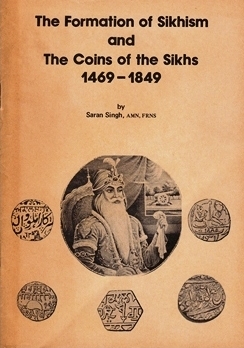
Saran Singh
AMN, FRNS · Ludhiana · Fellow of the Royal Numismatic Society, LondonThe Formation of Sikhism and The Coins of the Sikhs 1469–1849 (Ludhiana: privately published, c. 1979)
Saran Singh's 1979 booklet — modest in format, immense in influence — was the first attempt since the colonial-era catalogues to provide a complete type survey of Sikh coinage from the earliest Nanakshahi issues through the last coins of the Sikh Empire. Working from his own collection and from the major institutional holdings, Saran Singh identified and illustrated the primary coin types across all the imperial and Cis-Sutlej mints.
The booklet's distinction is its framing: rather than treating Sikh coins as merely a chapter in Punjab numismatics, Saran Singh placed them within the theological and political formation of Sikhism itself — the coin legends as expressions of Sikh sovereignty, the Gobindshahi couplet as a statement of political theology. This interpretive approach, which connects the numismatic evidence to the history of the Panth, was adopted and expanded by all subsequent scholars.
Saran Singh was elected a Fellow of the Royal Numismatic Society, London — the first South Asian Sikh numismatist to receive this distinction — in recognition of his contributions to the field. His son Dalwinder Singh Sidhu would later co-author the definitive modern catalogue published by Spink.
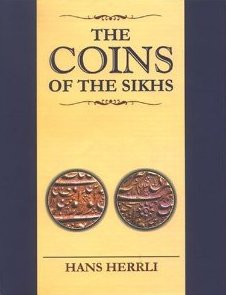
Hans Herrli
Switzerland · Numismatist and die-study specialistThe Coins of the Sikhs (Zurich: Hans Herrli, 1993; second edition 2004)
Hans Herrli's Coins of the Sikhs is the single most rigorous technical study of Sikh coinage ever published. A Swiss numismatist working from European collections and from an extensive correspondence with Indian collectors and institutions, Herrli brought the methods of European die-study analysis to a field that had previously relied on descriptive cataloguing.
Herrli's central contribution is the systematic die analysis of the major mints — particularly Lahore and Amritsar — establishing for the first time the sequence of obverse and reverse dies, the die combinations, and the relative chronology of striking within the VS calendar year sequences. His weight tables for each mint and type, drawn from a corpus far larger than any previous scholar had assembled, established the standard weight sequences for Sikh rupees that are still used as the primary reference for authenticity assessment.
The second edition (2004) expanded the coverage to include additional Cis-Sutlej material and new die combinations identified after the first edition. The book is essential for any serious collector or researcher; its die illustrations, printed at high quality, allow comparison with specific specimens in a way that no earlier catalogue had achieved.
The Living Tradition
The past two decades have produced the most comprehensive catalogue of Sikh coinage ever assembled, alongside a new generation of specialist studies. The Sidhu–Spink catalogue of 2022 is the definitive modern reference; Gurpair Singh's work on Amritsar coinage adds depth to the most important mint in the Sikh numismatic tradition; Surinder Singh's study situates Sikh coinage within the broader narrative of Sikh sovereignty.
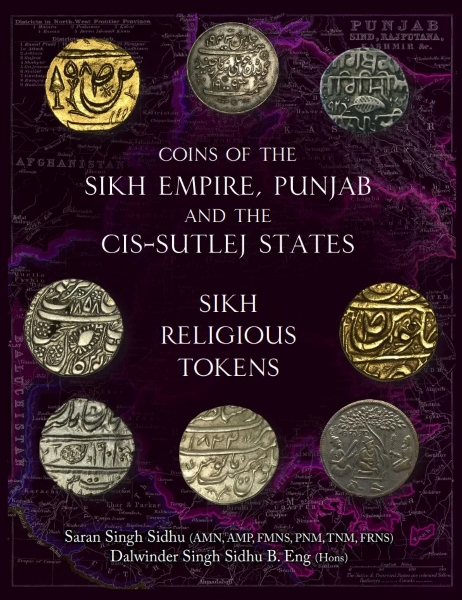
Saran Singh Sidhu & Dalwinder Singh Sidhu
AMN, AMP, FMNS, PNM, TNM, FRNS · Dalwinder Singh Sidhu B.Eng (Hons)Coins of the Sikh Empire, Punjab and the Cis-Sutlej States; Sikh Religious Tokens (London: Spink & Son, 2022)
The Sidhu–Spink catalogue of 2022 is the most comprehensive work ever published on Sikh coinage. Running to over 600 pages, it covers the entire field from the Nanakshahi coins of the Misl period through the last Cis-Sutlej issues of 1948, including the full corpus of Sikh religious tokens — a category largely neglected by previous scholars — and the frontier and special-purpose issues that exist in the margins of the standard catalogues.
Dalwinder Singh Sidhu, son of the pioneering Saran Singh (FRNS), brings to the catalogue both his father's foundational work and a lifetime of collecting and research. The accumulation of qualifications — AMN, AMP, FMNS, PNM, TNM, FRNS — reflects the depth of engagement with numismatic institutions across multiple countries. Dalwinder Singh Sidhu contributed the technical analysis and the die-study components that extend Herrli's work on the major mints.
The catalogue's treatment of the VS dating sequence across all mints, the identification of new varieties not previously catalogued, make it the standard working reference for collectors and dealers. Its publication by Spink — the world's oldest numismatic auction house, which also handled the dispersal of elements of the Court collection — gives it an institutional authority that previous privately published works lacked.
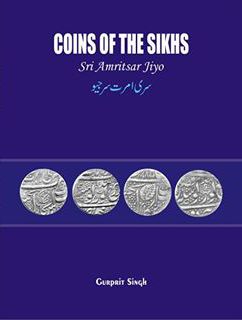
Gurprit Singh
Contemporary · Amritsar specialistCoins of the Sikhs: Sri Amritsar Jiyo
Gurprit Singh's study of Amritsar coinage is the most focused examination of the single most important mint in Sikh numismatics. The Amritsar mint occupied a unique position in the Sikh coin tradition: it was the sacred mint, struck in the city of the Harmandir Sahib, and its coins bore legend varieties and die characteristics that set them apart from the Lahore issues that dominated the commercial coinage of the empire.
The title Sri Amritsar Jiyo — reflects the theological resonance that the city carried for the Khalsa. Gurpair Singh's analysis of the mint's production, the sequence of dies, the weight standards, and the particular character of Amritsar coinage within the broader Sikh numismatic tradition fills a gap left by more general catalogues. His work draws on a specialist collection and on access to institutional holdings in Amritsar itself.
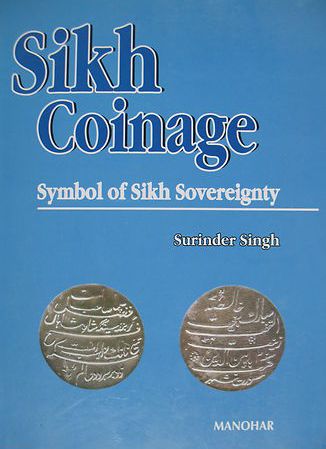
Surinder Singh
Contemporary · Historian of Sikh numismaticsSikh Coinage: Symbol of Sikh Sovereignty (New Delhi: Manohar, 2004)
Surinder Singh's Sikh Coinage, published by Manohar — the leading academic press for South Asian history — is the most historically contextualised study in the modern literature. Where Herrli provides die analysis and Sidhu–Spink provides comprehensive cataloguing, Surinder Singh asks the interpretive question: what do these coins mean? His answer, developed across the book's chapters, is that Sikh coinage is the clearest possible expression of the Khalsa's claim to sovereign political authority — a claim made not through royal portraiture or dynastic names, as every preceding Indian currency had done, but through the invocation of the Gurus alone.
The book's particular strength is its treatment of the transition periods: the Misl era coins that preceded Ranjit Singh's unification, the variations in legend and type that mark the different phases of the empire's political history, and the survival of Gobindshahi coinage in the Cis-Sutlej states long after the empire itself had fallen. Surinder Singh's analysis of the coin legends as political theology — reading each couplet as a statement about the nature of Sikh sovereignty — provides a framework that no purely numismatic study could offer.
Further Literature
The scholarly literature of Sikh numismatics extends well beyond monograph-length works. The major auction catalogues, particularly those of Spink, Baldwin's, and Morton & Eden, have contributed significantly to the documented record — establishing market prices, publishing previously unrecorded varieties, and tracing the provenance of major collections. The journals of the numismatic societies have published specialist articles on individual mints, coin types, and periods.
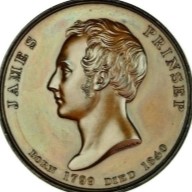
James Prinsep
1799–1840 · Assay Master of the Calcutta Mint · Secretary, Asiatic Society of BengalPrinsep's Essays on Indian Antiquities (1858, edited by Thomas published posthumously) and his articles in the Journal of the Asiatic Society of Bengal include early treatments of Punjab coinage. His decipherment of the Kharosthi and Brahmi scripts — among the greatest achievements of Indian epigraphy — gave later numismatists the tools to read the earlier coin legends that provide the pre-Sikh context for the Punjabi numismatic tradition.
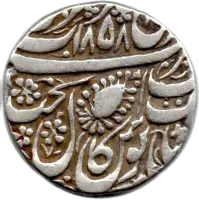
Elizabeth Errington
British Museum · Indo-Greek and Gandharan specialistErrington's 1995 article in Topoi (vol. 5/2, pp. 409–424) documenting the rediscovery of General Court's coin collection and coin rubbings is essential for understanding the provenance of the early European collections of Sikh coins. The 627 coin rubbings in three albums, found at an English provincial book sale by Douglas Saville of Spink in March 1994, allowed 233 of the original 791 coins in Court's 1826 collection to be traced to the Cunningham/British Museum holdings.

Spink & Son, London
Est. 1666 · World's oldest numismatic auction houseSpink's auction catalogues from the 1990s onward have been a primary source for documented Sikh coin specimens, established market valuations, and new variety records. The house's sale of elements of the Court collection — following the rediscovery of the rubbings — created the single most significant provenance record in modern Sikh numismatics. Spink subsequently published the Sidhu catalogue (2022) as part of its scholarly monograph series.
SikhCoins.in
This database has been assembled over many years with reference to all the major works listed above. Herrli is the primary reference for die identification; Sidhu–Spink for cataloguing; Temple for the Cis-Sutlej material; Cunningham for the historical framework. Where this database departs from or extends the published catalogues — particularly in the weight sequences of the Peshawar rupees and the VS1889 Kashmir attribution question — those findings are documented in the research essays.
Browse the Collection →Jeevandeep M Singh
Numismatist, researcher and collector · Ludhiana, Punjab · Tarna Dal · Nishanwalia Misl
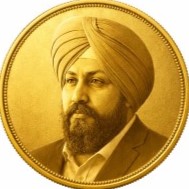
Jeevandeep M Singh
Collecting since 1980 · Researching since the 1990s · Ludhiana, PunjabJeevandeep M Singh began collecting Sikh coins in 1980, when a chance encounter at an Amritsar vendor's stall with two small copper paisas — a Gurmukhi-type and a Farsi-type from the Amritsar mint — set a course for a lifetime of research. This database now comprises 1,320+ coins across 54+ albums spanning the complete arc of Sikh numismatics, from the Banda Bahadur rupees of 1710 to the last Cis-Sutlej issues of 1948.
His original research has been published in the journals and bulletins of the Oriental Numismatic Society, the Numismatic Society of India, the Awadh Coin Society, and the Mumbai Coin Society. His specialisations are the Cis-Sutlej states, the Misl period coinage, and the weight and die analysis of the major Sikh Empire mints.
The Online Archive · 2003 – Present
2003
numis.in
The predecessor site — a static HTML website displaying Cis-Sutlej and Sikh Empire coins, among the earliest online resources devoted specifically to Punjab numismatics. numis.in established the archive that SikhCoins.in would later expand and deepen.
2009
sikhcoins.in registered
SikhCoins.in was registered and launched as a PhotoPost gallery — one of the first purpose-built online galleries of Sikh coinage — displaying the collection with coin-by-coin documentation, legends, weights, and mint attributions.
Present
Coppermine · 1,320+ coins
The gallery migrated to a modern back-end and expanded to over 1,320 coins across 54+ albums, complemented by the history essays and original research articles. The site has accumulated 3,000,000+ views and remains entirely free and non-commercial.
Published Research & Contributions
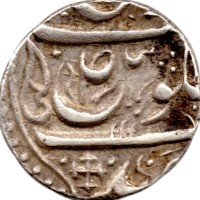
A Heavy Sikh Rupee of Patiala
Oriental Numismatic Society Journal · sikhcoins.inAn examination of the heavy-weight Gobindshahi nazarana rupee series of Patiala — documenting weight standards, die characteristics and ruler attribution of an unusual series beginning earlier than previously thought: as early as VS 1893/1898 during the reign of Karam Singh, rather than the conventionally cited VS 1906. The paper provides precise weight data and die descriptions enabling attribution of previously unattributed specimens.
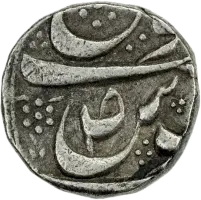
Coinage of Kaithal State
Awadh Coin Society · sikhcoins.inA study of the Rajashahi-type rupees of the Bhai-ruled state of Kaithal — whose chiefs descended from Bhai Bhagtu ji, a devoted Sikh of Guru Amar Das, rather than from Phul. The paper establishes key diagnostic features for Kaithal attribution: the 6-dotted rosette within the nun of Bechun on the obverse, and the four dots to the right of the sin of Julus on later reverses — distinguishing Kaithal from the near-identical Patiala coinage and providing a reliable attribution tool for collectors and dealers.
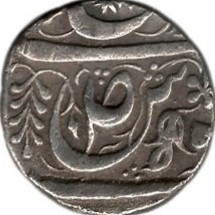
Cis-Sutlej Punjab States — A New Discovery: The Bhadaur Rupee
2023 · Numismatic Society of India, Shimla · sikhcoins.inThe identification and attribution of a previously unknown Durrani-type rupee — featuring a floral bud-and-flower state symbol — to the Phulkian state of Bhadaur, attributed to Bir Singh (c. 1805–15). Bhadaur was the original seat of the Phulkian dynasty and had previously been considered a state with no known coinage. This paper established Bhadaur's place in the corpus of Cis-Sutlej numismatics for the first time, adding a new entry to the catalogue.
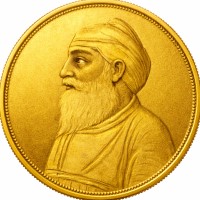
Coins of the Cis-Sutlej States
2022 · Presentation · NDMC Numismatic Exhibition, New DelhiA comprehensive survey of the coinage of the Phulkian states — Patiala, Nabha, Jind and Kaithal — and the wider Cis-Sutlej political order, presented at the New Delhi Municipal Corporation numismatic exhibition. The presentation drew on original die-study research and the Spink 2022 catalogue data to establish the chronology of Durrani and Gobindshahi types across all four states.