The Empire in
Popular Culture
Long after the last Khalsa rupee left the mint, the Sikh Empire kept its hold on the imagination — in a 1970s French adventure serial, in Indian television epics, in novels and documentaries, and in the stubborn legends that gather around a diamond, a courtesan's coin, and a one-eyed lion of a king.
Screen · Page · LegendI · Introduction
The Lion in the Imagination
This site is built on hard evidence — coins, mint-names, dated medals, the dry record of treaties. But the Sikh Empire has always lived a second life beyond the archive, in the stories people tell about it. Some of those stories are careful history; others are romance, propaganda, or pure invention. This page gathers the most notable retellings — on screen, on the page, and in folklore — and tries, where it can, to mark the line between what is documented and what is merely irresistible.
It is a story unusually rich in such material, because the empire sat at a crossroads of cultures. A French general's memoirs, a Hungarian painter's canvases, a British adventure-novelist's anti-hero, a Punjabi television serial, an animated feature for children — each saw the Lahore court through its own eyes, and each left a version of Ranjit Singh for posterity.
II · The First Screen Empire
Le soleil se lève à l'est — 1974
The earliest and most unusual screen treatment of the Sikh court came not from India but from France. Le soleil se lève à l'est — "The Sun Rises in the East" — was a six-episode television mini-series made in 1974, directed by François Villiers, with the celebrated actor Saeed Jaffrey as Maharaja Ranjit Singh.
Its premise is precisely the territory of this site's Foreign Officers page. Two veterans of Napoleon's armies, cast adrift at the fall of the Empire, make their way east to the kingdom of the Punjab, where its king — seeking to remake his cavalry into a modern army — takes them into his service as generals. The series centres on Jean-François Allard, the French cavalry officer who really did rise to command the Fauj-i-Khas, and carries his story all the way to the quiet of Saint-Tropez, his birthplace. A Honigberger figure even appears in the cast, and the series came with a theme song performed by the rock star Johnny Hallyday. It now streams through the French national audiovisual archive (INA's madelen), with the episodes also circulating on YouTube and Dailymotion under the English title.
For a numismatic and historical site its value is double: it is both a genuine period curiosity and a dramatisation of the very Europeans whose careers are documented elsewhere here. Bobby Singh's later English-language novel of the same name, The Sun Rises in the East, retells the same Allard story for modern readers — a separate work, not the original.
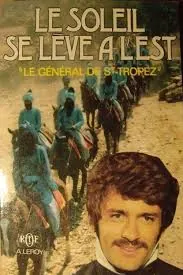
TV mini-series · France · 1974
Le soleil se lève à l'est
Two Napoleonic officers enter the service of the Rajah of the Punjab and become generals of his army; the tale follows General Allard from Lahore to Saint-Tropez. Now on INA's madelen, with episodes on YouTube.
III · On Screen
Serials, Films & Documentaries
Indian television has twice taken on Ranjit Singh at epic length; the cinema has reached both for animation and for the tragedy of the last Maharaja; and documentary film has gravitated, again and again, to the diamond and the exiled prince.
Television
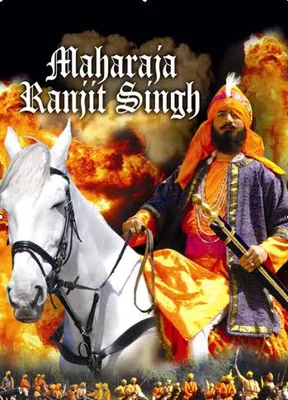
TV serial · 2010–11
Maharaja Ranjit Singh
A sweeping 56-part serial covering Punjab from Nadir Shah's invasion of 1739 to 1812 — the misl wars, Ranjit Singh's youth, and his rise to Lahore. Notably, it stops before the great conquests.
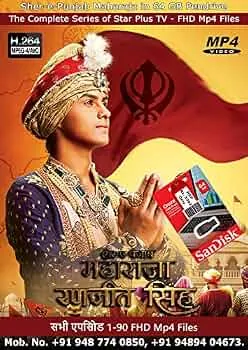
TV serial · 2017
Sher-e-Punjab: Maharaja Ranjit Singh
A second historical drama on the "Lion of Punjab," tracing his unification of the Punjab under one flag — a lavish, costume-driven retelling for a later television generation.
Film
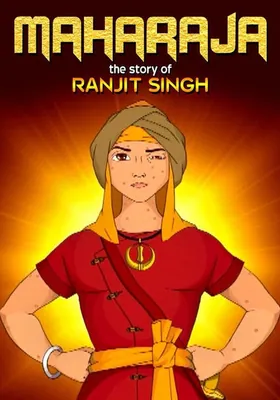
Animated feature
Maharaja: The Story of Ranjit Singh
An animated feature dramatising the warrior-king's rise, carrying the story to a younger and family audience.
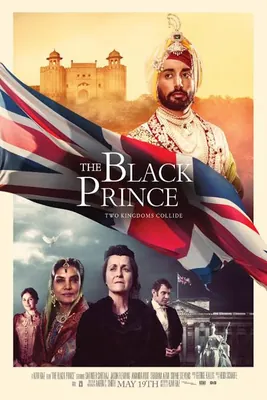
Film · 2017
The Black Prince
The story of Duleep Singh, the last Maharaja — enthroned at five, deposed and exiled to Britain, and his fraught bond with Queen Victoria.
Documentary
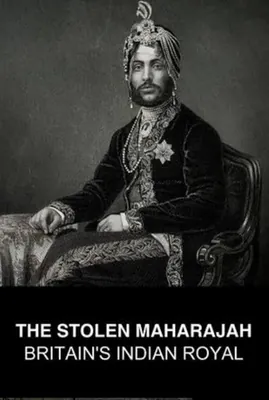
Documentary · BBC
The Stolen Maharajah: Britain's Indian Royal
Duleep Singh's life retraced through rediscovered letters, photographs and surviving artefacts, from the palaces of Lahore to Elveden Hall in Suffolk.

Documentary · 2019
The Lost Empire
A survey of the rise of the Sikh Empire under Ranjit Singh and its swift collapse after his death.
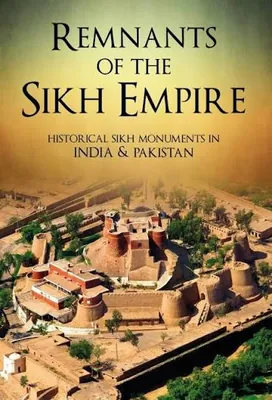
Documentary · ~25 min
The Remnants of the Sikh Empire
A filmed survey of the monuments and forts of Ranjit Singh's reign, many now in Pakistan and in varying states of ruin — companion to Bansal's book of the same name.
IV · Beyond the Lion
The Wider Sikh Past on Screen
Everything above concerns one man. But the cinema that has grown up around Sikh history over the last twenty years is drawn overwhelmingly to a different century — that of the Gurus, the persecutions and the misls, which is to say the period before Ranjit Singh rather than his own.
That is worth noticing. The empire produced the coinage, the treaties and the state; the eighteenth century produced the martyrdoms. Popular memory has consistently preferred the second. Where the Maharaja gets television serials, Banda Singh Bahadur and the Sahibzadas get feature films — and the films reach far larger audiences.
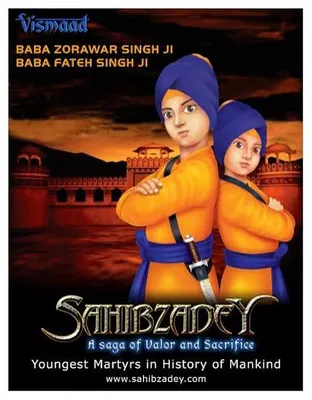
Animation · 2005
Sahibzadey: A Saga of Valor & Sacrifice
The film that created the genre. Made for around ₹35 lakh by twenty-two artists over fourteen months, drawing its storyline from the SGPC's illustrated Nikkian Jindan Vadda Saka. Released first on DVD to the diaspora, and by most accounts still the most widely watched Sikh film ever made.
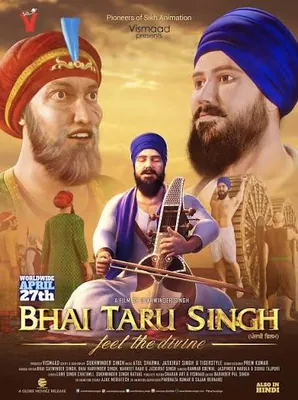
Animation · 2006–2010
The Rise of Khalsa · Sundri · Bhai Taru Singh
Vismaad followed with Banda Singh Bahadur, then Sundri from Bhai Vir Singh's 1898 novel, then Bhai Taru Singh — five features in seven years, every frame drawn by hand. The films were made not-for-profit.
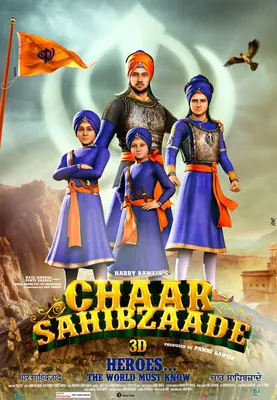
Animation · 2014
Chaar Sahibzaade
The first Sikh subject given a full 3D treatment and a wide theatrical release. Made for ₹20 crore and returning around ₹24 crore, it proved the commercial case the DVD-era animations had only hinted at. The voice artists for the Guru and the Sahibzadas were left uncredited — a deliberate decision.
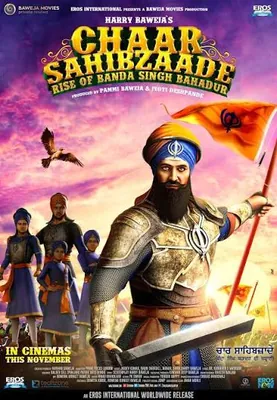
Animation · 2016
Chaar Sahibzaade: Rise of Banda Singh Bahadur
The sequel turns to Banda Singh's campaign and the reckoning at Sirhind — the events treated on this site's Banda Bahadur and Sarhind Mint pages. Reviews praised the ambition and faulted the animation; one critic called it Baahubali seen through a Chhota Bheem filter.
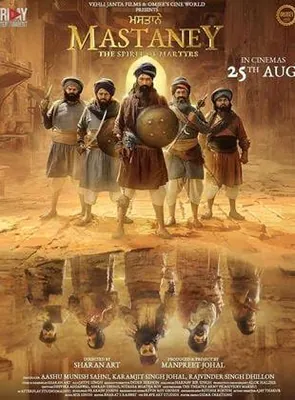
Feature · 2023
Mastaney
Set in 1739, and the commercial phenomenon of recent Punjabi cinema — roughly ₹10 crore spent against some ₹74 crore returned. Its premise, hired impostors made to perform as Sikhs before a court, comes from Giani Gian Singh's Naveen Panth Prakash, though the film moves the scene from Delhi to Lahore. The episode is set out in full on the Sikh Warfare page.
Feature · 2025
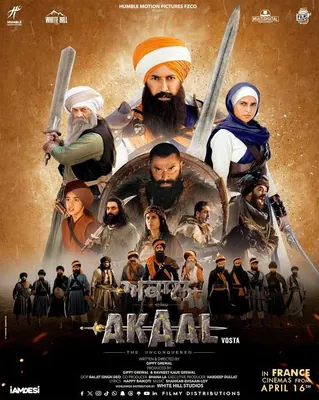
Akaal: The Unconquered
Historical fiction rather than history: an invented Sardar Akaal Singh defending his village in the 1840s. What makes it notable here is the choice of period — the leaderless Punjab after Ranjit Singh's death, which almost no film has attempted. It drew protests over depictions judged contrary to the Khalsa rahit.
Two further strands sit just outside this page's period. Guru Nanak Jahaz (2025), again from Sharan Art and Tarsem Jassar, treats the Komagata Maru; and a substantial body of work — Saka: The Martyrs of Nankana Sahib, Sajjan Singh Rangroot, Subedar Joginder Singh, Kesari, Sardar Udham — deals with the colonial and post-annexation Sikh experience rather than the sovereign one.
The pattern across all of it is the same one that governs the Ranjit Singh material above. Where the record is thin, the screen fills it in; where the record is full, the screen tends to stay away. There is no feature film about the Lahore mint, the Bhairowal settlement or the recoinage of 1847 — and there is unlikely ever to be one.
V · On the Page
Fiction & Popular History
In print the empire has drawn both novelists and historians — and, fittingly, the two strongest popular-history titles both circle the same object: the Koh-i-Noor.
Fiction
Novel
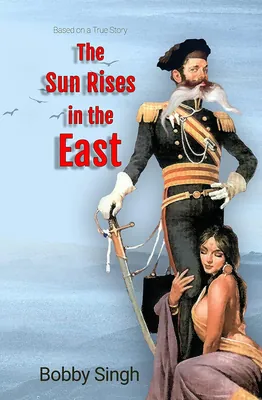
The Sun Rises in the East
A modern retelling of General Allard's adventures — soldier-of-fortune to the Maharaja, and his love for the captured Chamba princess Bannu Pan Deï — sharing its title with the 1974 French serial.
Novel · 1990
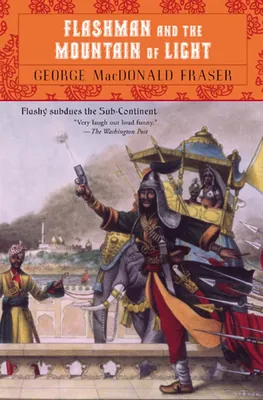
Flashman and the Mountain of Light
Fraser's roguish anti-hero is dropped into the First Anglo-Sikh War as a reluctant spy in the Lahore court — entangled with Rani Jindan, the battles of Ferozeshah and Sobraon, and the Koh-i-Noor itself. Bawdy, but built on exacting research.
Popular History
History · 2017
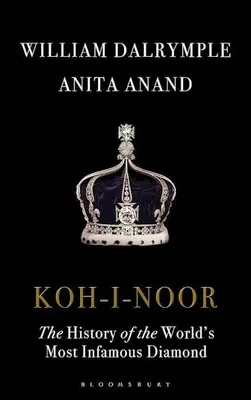
Koh-i-Noor: The History of the World's Most Infamous Diamond
Traces the great diamond from the Mughal court through Persia and Afghanistan to Ranjit Singh's durbar and on to the British Crown — stripping away centuries of accreted legend along the way.
History · 2015
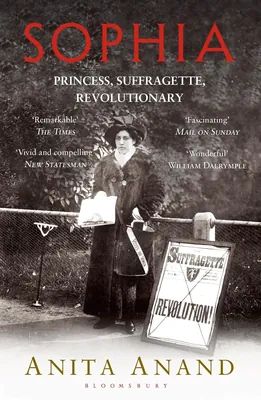
Sophia: Princess, Suffragette, Revolutionary
The biography of Sophia Duleep Singh — Ranjit Singh's granddaughter and goddaughter of Queen Victoria — who became a militant campaigner for women's suffrage in Britain.
VI · Legend & Folklore
The Stories That Outgrew the Facts
Some of the empire's most durable images are not history at all, but legend — and several connect directly to objects and people documented elsewhere on this site.
The curse of the Koh-i-Noor. Popular lore holds that the diamond is cursed, bringing ruin to any man who wears it — which is why, the story goes, it is now worn only by the women of the British royal house. The documented history is stranger and sadder: on his deathbed Ranjit Singh was said to have willed the stone to the temple at Jagannath Puri, a bequest his court never honoured, and it passed instead, by a child's forced signature, to the Crown. The fuller account sits on the Fall of the Empire page.
Moran and her coin. The Muslim dancing-girl Moran is remembered in legend as the courtesan for whom a besotted Maharaja struck a special rupee — the "Moranshahi." The truth behind that romantic story, and what the coin actually was, is examined on the Moranshahi Rupee page.
The men who would be kings. The European adventurers attracted legends of their own: Allard and his princess, and the American Josiah Harlan, who governed provinces for the Maharaja, declared himself "Prince of Ghor," and is often named as a model for Kipling's The Man Who Would Be King. Their documented careers are on the Foreign Officers page.
The rebel queen. Rani Jindan, mother of the last Maharaja, entered British legend as "the most dangerous woman in Asia" — a phrase that says as much about her enemies' fears as about her. Her story is told among the Women of the Darbar.
VII · Music, Art & Memory
Beyond the Screen and the Page
The empire echoes in sound and image as much as in narrative. The DD National serial carried a score by the ghazal master Jagjit Singh; the 1974 French series, improbably, a theme by the rock star Johnny Hallyday. On canvas, the Hungarian painter August Schoefft, who travelled to Lahore after Ranjit Singh's death, produced the era's most ambitious European images of the court — grand reconstructions of the Maharaja's darbar now associated with the Princess Bamba collection in Lahore.
The memory remains contested in the present. The Koh-i-Noor is still set in a British crown, and calls for its return from India, Pakistan and Afghanistan recur with every royal occasion. Statues and memorials — including one of Ranjit Singh raised at Saint-Tropez, Allard's home town — keep the empire's afterlife alive in stone as well as on screen.
VIII · The Evidence Beneath
Where the Coins Meet the Legend
Every dramatisation must simplify, and most must invent. The serials compress decades into seasons; the novels supply the romance the record withholds; the legends keep what the documents cannot. Against all of it stands the quiet, dateable evidence this site is built on — the Nanakshahi and Gobindshahi rupees, the mint-names of Lahore and Amritsar, the Vikram Samvat years struck into the metal, the first sovereign Sikh coins of Banda Singh Bahadur.
The coins do not tell a romance. But they tell the truth about who ruled, where, and when — and so they are the surest check on every story told above. Read the films and the novels for the spell of the empire; read the coins for its reality.
IX · Watch & Read
A Short List
Screen. Le soleil se lève à l'est (1974, dir. François Villiers; INA madelen / YouTube). Maharaja Ranjit Singh (DD National, 2010–11). Sher-e-Punjab: Maharaja Ranjit Singh (Life OK, 2017). Maharaja: The Story of Ranjit Singh (animated; Netflix). The Black Prince (2017). The Stolen Maharajah (BBC); The Lost Empire (2019); The Remnants of the Sikh Empire (Bobby Singh Bansal).
Page. George MacDonald Fraser, Flashman and the Mountain of Light (1990). Bobby Singh, The Sun Rises in the East. William Dalrymple & Anita Anand, Koh-i-Noor (2017). Anita Anand, Sophia: Princess, Suffragette, Revolutionary (2015).
Have a title we've missed — a film, a serial, a novel, a legend? The empire's afterlife is still being written, and additions are welcome.